

MKE Black Balloon Day Event Spurs Mourning and Determination to Prevent Drug Overdose Deaths and Save Lives

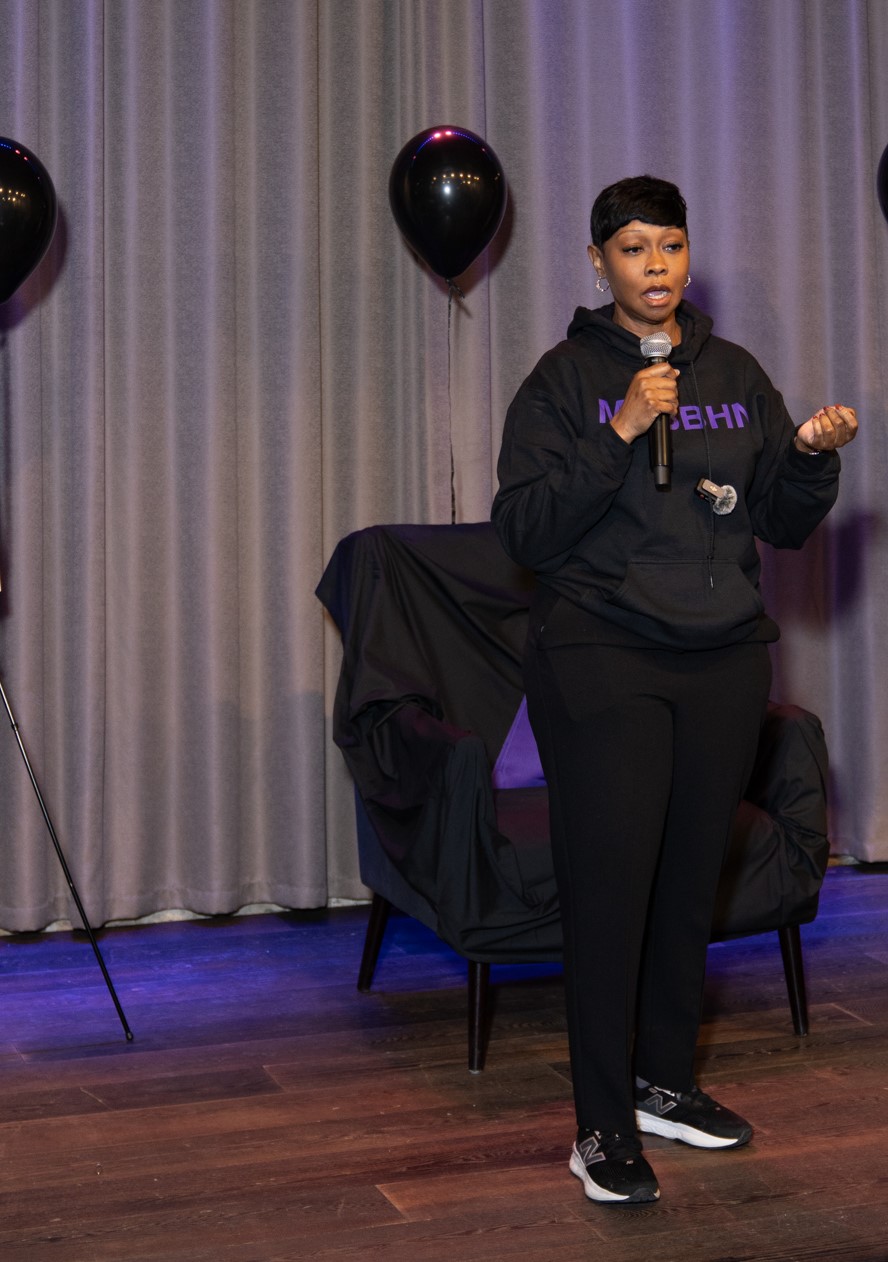
Tahira Malik

MKE Mayor Johnson

Fire Chief Lipski & DeShawn Ewing
Samad’s House launches the Midwest Regional Black & Brown Harm Reduction Network, a powerful initiative to strengthen drug overdose prevention across the region
MILWAUKEE, WI, UNITED STATES, March 10, 2026 /EINPresswire.com/ -- In a heartening display of unity, grief, and hope, community members, civic leaders, and advocates gathered at No Studios for Samad’s House Black Balloon Day. The emotionally charged event provided a sacred space to honor and remember the countless lives lost to the devastating drug overdose epidemic. Simultaneously, it marked a historic launch of the Midwest Regional Black and Brown Harm Reduction Network, a groundbreaking coalition designed to mobilize community action, share vital resources, and implement culturally responsive strategies to combat the ongoing overdose crisis.
Black Balloon Day has long been a national day of remembrance, using black balloons to symbolize the heavy toll of substance use disorders and honor those lost. The event on Friday, March 6, served as a powerful reminder of this purpose, bringing together community members, civic leaders, and advocates to reflect on the ongoing overdose crisis and the importance of collective action.
"Each year we commemorate the lives lost unnecessarily to overdose deaths," Malik shared with the attentive audience. "These deaths were preventable. Black balloon day is a time to mourn and to issue an urgent call to action. We have the tools, Naloxone, fentanyl testing strips, and other harm reduction education to be able to save lives. Our mission is to ensure that every community, especially black and brown communities, has access to these life-saving resources."
In a monumental announcement, Malik launched the Midwest Regional Black and Brown Harm Reduction Network. This new alliance will span across twelve states, including Wisconsin, Illinois, Minnesota, Michigan, Indiana, Ohio, Missouri, Iowa, Kansas, Nebraska, South Dakota, and North Dakota. The network is built on five core pillars: resource sharing, policy and advocacy, narrative change, data sovereignty, and caregiver support. By uniting organizations led by Black and Brown individuals, the network aims to advance racial equity in harm reduction and elevate the voices of those with lived experiences.
Malik emphasized the transformative nature of this new coalition. "The launch of the Midwest Regional Black and Brown Harm Reduction Network represents a transformative step in addressing the overdose crisis through a culturally responsive, community-driven approach," she explained. "Our vision is a Midwest where Black and Brown communities are resourced, respected, and self-determining, and where harm reduction is practiced. This network is about replacing punishment with care and ensuring people who use drugs can survive and thrive."
The event drew significant support from prominent local officials, highlighting the critical intersection of grassroots advocacy and political leadership. Mayor Johnson attended the event to express his unwavering support for Samad's House and the new regional network. He spoke passionately about the collective responsibility to protect vulnerable residents and the deep, communal impact of every single overdose death.
"Just like when other instances happen in our community, and people get hurt, and people lose their lives, it creates a ripple effect. The same thing is true of overdose deaths. The exact same thing is true," Mayor Johnson said. He praised the collaborative environment, adding, "We, without bias, without regard to somebody's condition, nobody has to be ashamed when they come to get the resources that they need. Because no one person, no one entity can do this or anything really alone. We always need a partnership."
Moreover, another key theme was removing stigma and restoring human dignity. DeShawn Ewing, Community Outreach and Engagement Manager at Community Advocates, Inc., delivered a moving speech that urged attendees to look beyond the staggering statistics and see the human beings affected by the crisis. He challenged the community to address the mental health struggles that often lie at the root of substance use, advocating for comprehensive support systems rather than isolation or judgment.
"It gives us an opportunity to honor those whose lives have been lost to overdose, and also to celebrate in a way that we are doing the work," Ewing reflected. "We will continue to keep humanity and dignity at the forefront of this work. Because a lot of times when you're talking about prevention work, sometimes you forget that there are humans involved, there are souls involved, there are lives involved. That's what really today is about, wrapping our arms around our community, around our neighborhood, around our friends, around our family, and not seeing people as statistics."
Ewing further emphasized the necessity of whole-person care, noting that our minds and bodies go through profound trauma. He explained that developing better coping strategies is essential to creating a well-formed, healthy community in Milwaukee County and beyond.
Milwaukee Fire Chief Aaron D. Lipski also took the stage to highlight the vital role of first responders in the harm reduction ecosystem. Chief Lipski spoke candidly about the juxtaposition of the black balloons against the traditional celebratory nature of balloons, using the imagery to challenge the audience's perceptions of addiction and societal sorting.
"Balloons are typically associated with a celebration. Today we've got them painted black, right? And so I think it's a juxtaposition that is necessary," Chief Lipski remarked. "It is absolutely crucial that we don't forget that these were lives and every life is worth celebrating. In our modern times, it's become so easy to sort people into good, bad, right, and wrong. Especially with the stigma attached to somebody gripped by addiction, it is so easy to let them just get sorted into the unseen and the forgotten or the unworthy. And as soon as we let ourselves fall into that trap, we are the problem."
Chief Lipski expressed his great pride in the Milwaukee Fire Department's involvement with Samad's House, noting that their willingness to get creative and find new ways to help is having a direct impact on addressing the wide disparities in overdose fatalities occurring in Black and Brown communities.
In addition to the regional network launch, Malik shared deeply personal stories of loss and resilience, culminating in the announcement of the relaunch of the Milwaukee County chapter of GRASS, which stands for Grief, Recovery and Support Services. This program is specifically designed to support families and friends who have lost loved ones to drug-related deaths. Sharing the story of her best friend Tanisha, who passed away from a drug overdose in 2018, Malik illustrated the profound, lingering weight of grief and the absolute necessity of creating safe spaces for communal healing. The GRASS chapter will officially relaunch in May, providing a structured curriculum and a compassionate environment for people to process their trauma.
Samad’s House has been at the forefront of this critical fight since its founding in 2020. What began as a single sober living home has rapidly grown into a robust network of three homes and a behavioral health clinic. The organization provides comprehensive, holistic services to help women and families maintain long-term sobriety. To date, Samad’s House has transformed the lives of more than 75 women and distributed over 2,300 naloxone kits and fentanyl test strips since 2024. The organization's Ambassador Program continues to empower women with lived experiences to serve as trusted, street-smart advocates in their own neighborhoods.
The successful Black Balloon Day event and the ambitious launch of the Midwest Regional Black and Brown Harm Reduction Network are important milestones in the region's approach to the overdose epidemic. By centering the voices of those most impacted, fostering cross-sector partnerships, and replacing punitive measures with radical care, Samad’s House and its partners are building a sustainable, life-saving framework for the future.
Public and private sector leaders, community members, service providers, and allies are encouraged to support and join this collaborative effort, sharing their expertise and commitment to ensure that harm reduction approaches continue to help save the lives of those with substance use disorders.
The event concluded with an emotional, poetic reading by Taishea Higgins, which captured the harrowing journey of addiction and the painful reality of lives cut entirely too short. Her words served as a poignant reminder that no one is born with substance disorders and that breaking the chains requires collective strength and unwavering societal support. “You have so much life to live and things to do,” she said. “Now you're gone and everyone's missing you. None of us was born with an addiction in this world, but when we become victims, we become one less boy or girl. So let's break every chain and curse that's trying to take our lives. Let's do this together, and together we will survive.”
###
Listen to Malik’s powerful podcast, Voices of the Front Lines
Read our February Newsletter at www.samadshouse.org/february-2026-newsletter
Please Donate to Samad’s House: HERE
Visit Samad’s House website at www.samadshouse.org
(For media interviews with Tahira Malik, contact Michael Frisby at mike@frisbyassociates.com
or 202-625-4328.)
About Samad’s House
Samad’s House is a Milwaukee-based organization dedicated to supporting women and families in recovery from addiction. Through holistic services, harm reduction tools, and a focus on mind, body, and spirit, Samad’s House empowers individuals to rebuild their lives and achieve lasting sobriety.
Michael K. Frisby
Frisby & Associates
+1 202-625-4328
mike@frisbyassociates.com
Legal Disclaimer:
EIN Presswire provides this news content "as is" without warranty of any kind. We do not accept any responsibility or liability for the accuracy, content, images, videos, licenses, completeness, legality, or reliability of the information contained in this article. If you have any complaints or copyright issues related to this article, kindly contact the author above.
